AI for apparel manufacturing

More production.
Better utilization.

Genorai helps apparel factories produce more from existing capacity by reducing avoidable delays, improving readiness and recovering faster when conditions change.
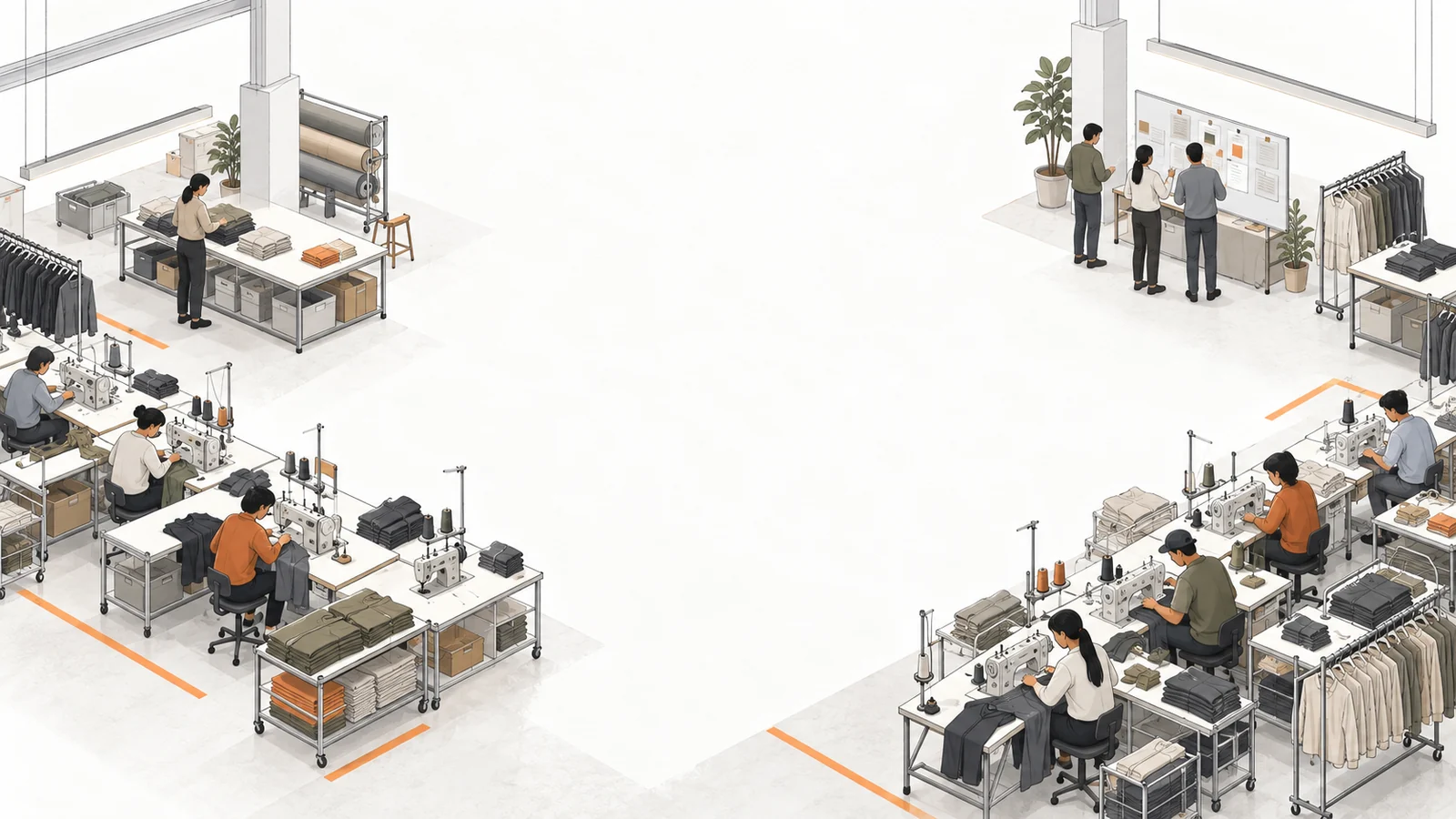
Editorial cutaway illustration of apparel sewing lines and a production-readiness area
Actual attendanceToday’s conditions
Skills & readinessBefore production starts
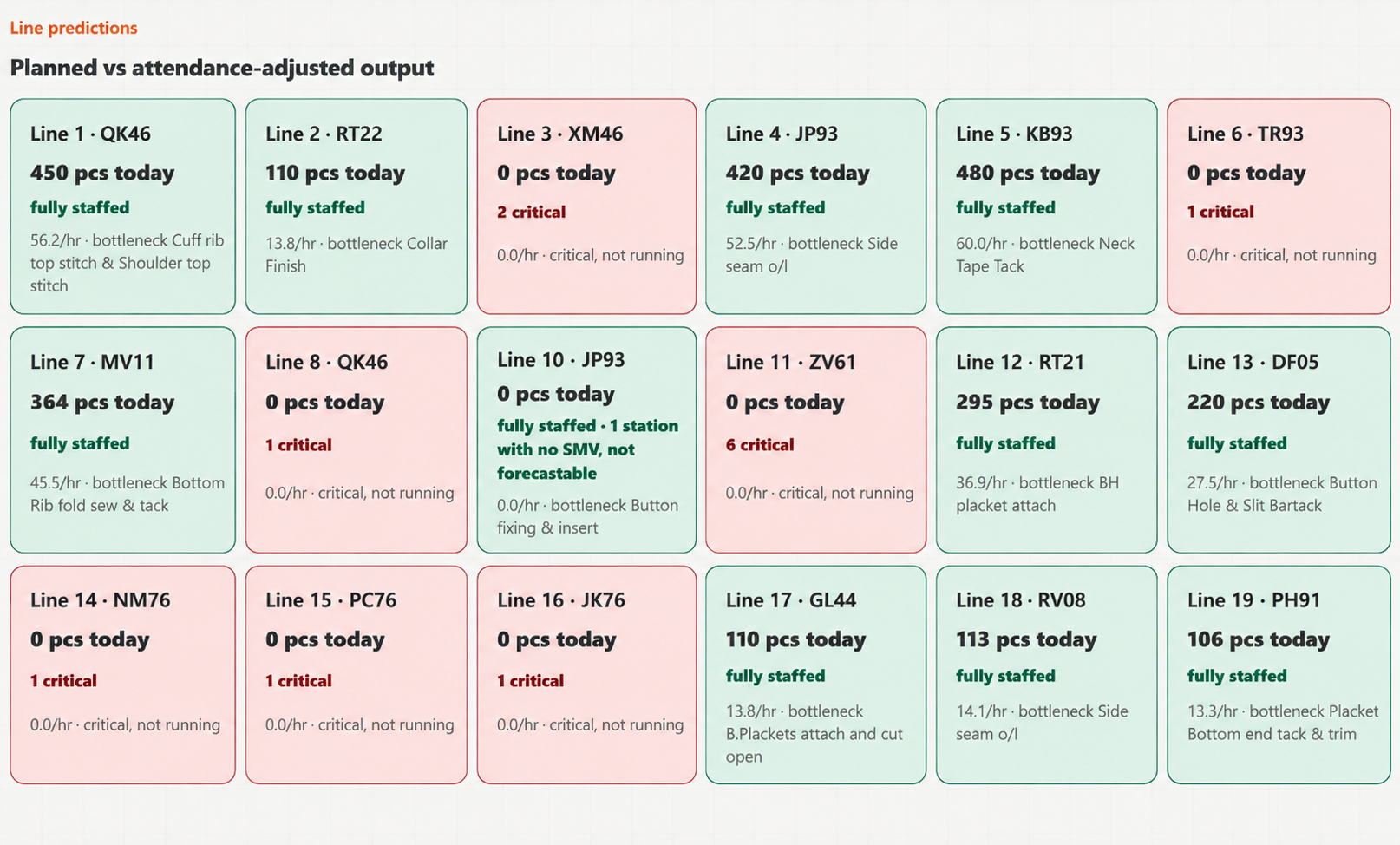
Representative line predictions view showing current output and staffing status across factory lines
Representative product view · example data

The capacity
is already there.

Factories already have people, machines, skills and production time. Too much usable capacity is lost to waiting, poor readiness, rework and slow recovery when plans change.

Productive factory continuity interrupted by operating frictionA qualitative orange production thread progresses, pauses at a readiness gap, loops through waiting and rework, breaks at a disruption, reconnects through recovery, and changes direction at a planned transition before continuing. Productive operationReadiness gapWaiting / reworkDisruptionRecoveryTransitionProductive operation
Productive operation
Readiness gap
Waiting / rework
Disruption
Recovery
Planned transition
Productive operation
Expected operating transition

Planned Transition Leaks

Productive time lost around expected transitions such as style starts, changeovers, transfers or restarts.

Unexpected disruption + recovery

Dynamic Recovery Leaks

Productive time lost while the factory recovers from absenteeism, material shortages, quality issues or other day-to-day disruption.

Capacity is not only lost when production stops. It is also lost in the time it takes to prepare and recover.
Connected factory

From buyer information to the changing factory floor.

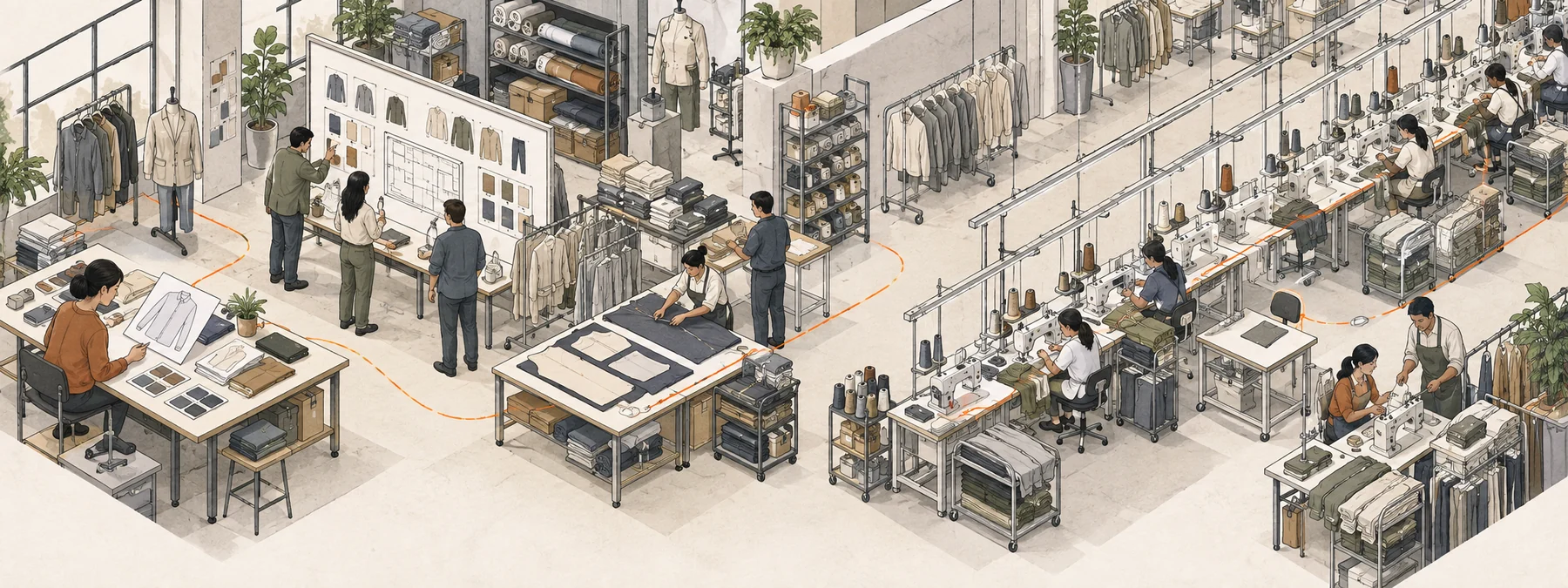
Editorial isometric panorama showing buyer garment information, planning, readiness, sewing production and adjustment to changing conditions in one connected apparel factory
Buyer informationPlanningReadinessProductionChanging conditions
Genorai today
  1. 01
    Buyer informationTech-pack processing
  2. 02
    PlanningLines & workforce
  3. 03
    ReadinessSkills & production preparation
  4. 04
    ProductionRespond when actual conditions differ from plan
  5. 05
    Production supportMarker processing
Buyer informationTech-pack processing
PlanningLines & workforce
ReadinessSkills & production preparation
ProductionReal lines, people and garments in motion
Changing conditionsRespond when actual conditions differ from plan.
Genorai today
  1. 01
    Buyer informationTech-pack processing
  2. 02
    PlanningLines & workforce
  3. 03
    ReadinessSkills & production preparation
  4. 04
    ProductionRespond when actual conditions differ from plan
  5. 05
    Production supportMarker processing
Evidence from factory work

More output from existing resources.

+101

pieces per line per day

+16.3% line efficiencyanother measure of the same underlying improvement
50 markers

processed in under 30 minutes

versus approximately 3–4 hours manually

Results vary by factory, process, data and implementation context.

Start with one factory problem that matters.

Talk to us →